Zone 1
Rubber Transition
9,000+ Trees to be suppressed
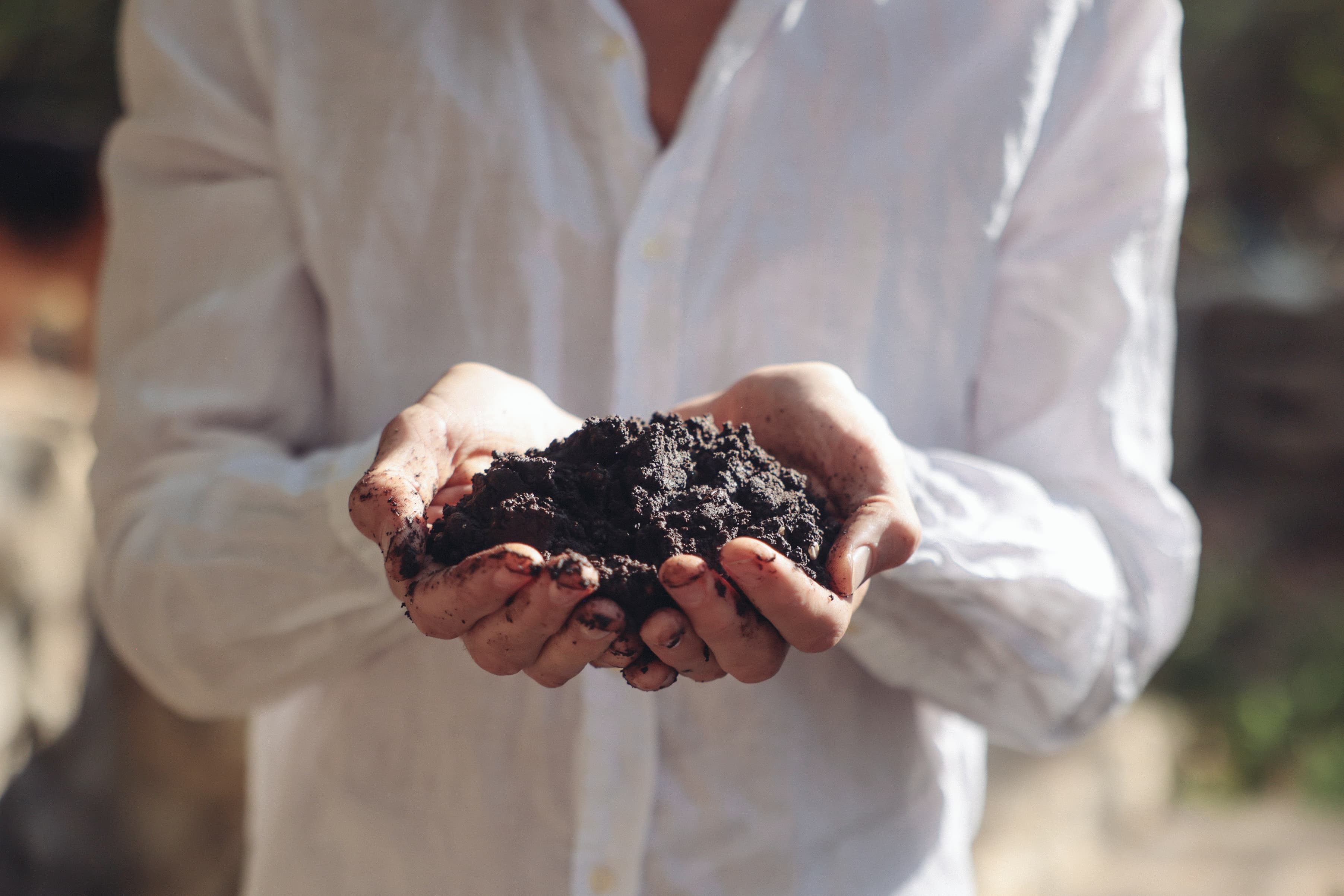
Rubber trees are removed in sequences to avoid abrupt soil exposure. Native pioneers follow immediately to stabilise soil and begin succession.
Fazenda ALUME · Ilhéus · Bahia
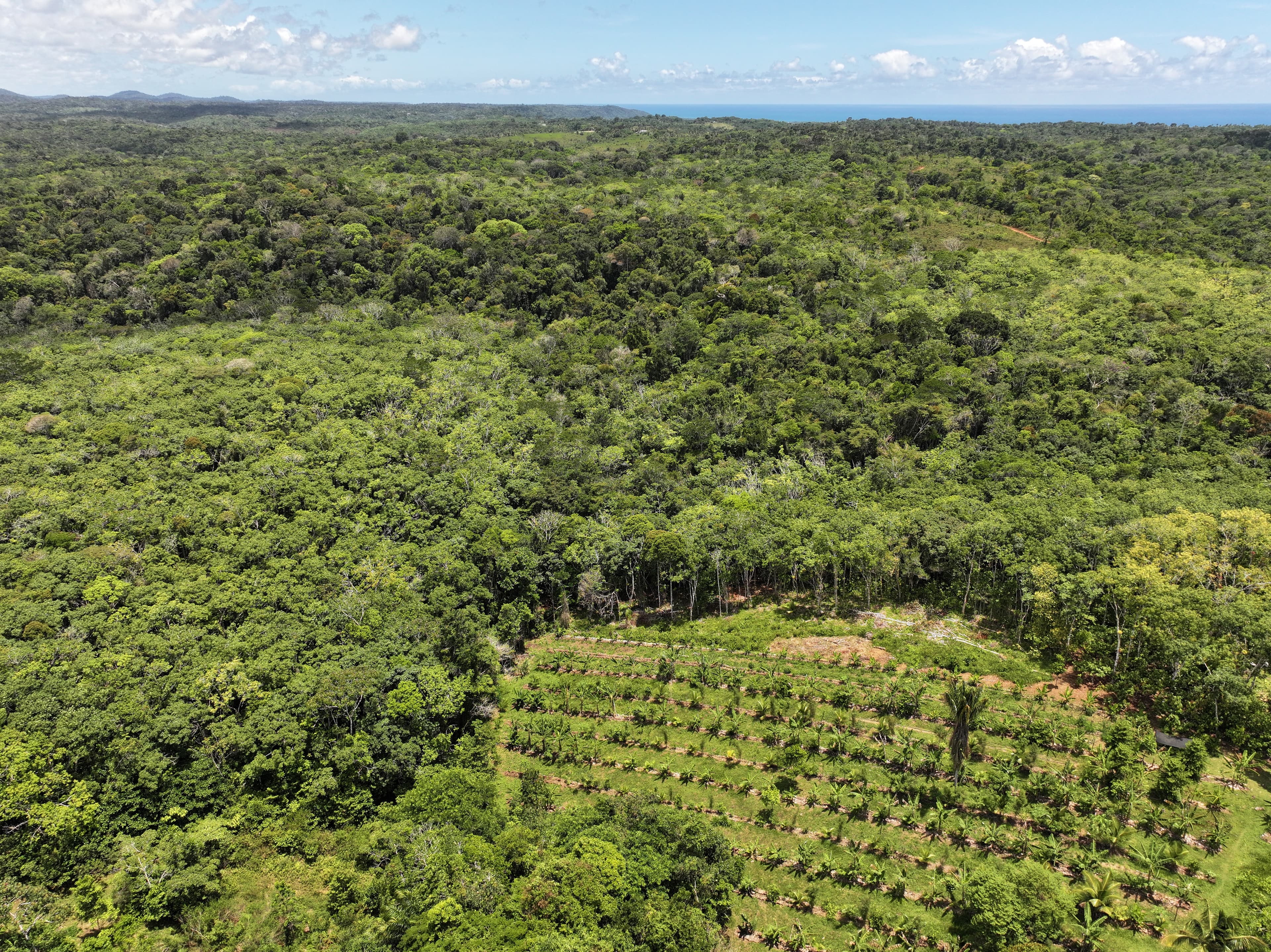
Forty-two hectares where forest recovery, agroforestry, research, education, and community meet the living landscape.
Cycles of Life
More than half a century ago, this landscape became part of someone else’s dream.
Two brothers acquired the original property and divided it between them. One planted cacao. The other planted rubber. Their vision reflected the opportunities of their time, and the rubber plantation grew to nearly 13,000 trees across what had once been Atlantic Forest.
Years later, ALUME became the steward of the rubber side.
We are grateful for what came before—not because monoculture is the future, but because it gave us the freedom to create one. Had this remained an intact native forest, it would never have been appropriate to redesign it. Instead, we inherited a landscape that had already been transformed, giving us the responsibility—and the opportunity—to regenerate it.
One of our earliest lessons came from trying to establish syntropic agroforestry beneath the existing rubber canopy. It did not work. The dense plantation prevented the light, ecological dynamics, and succession that regenerative systems depend on. Rather than forcing a method onto the land, we listened to what it was teaching us.
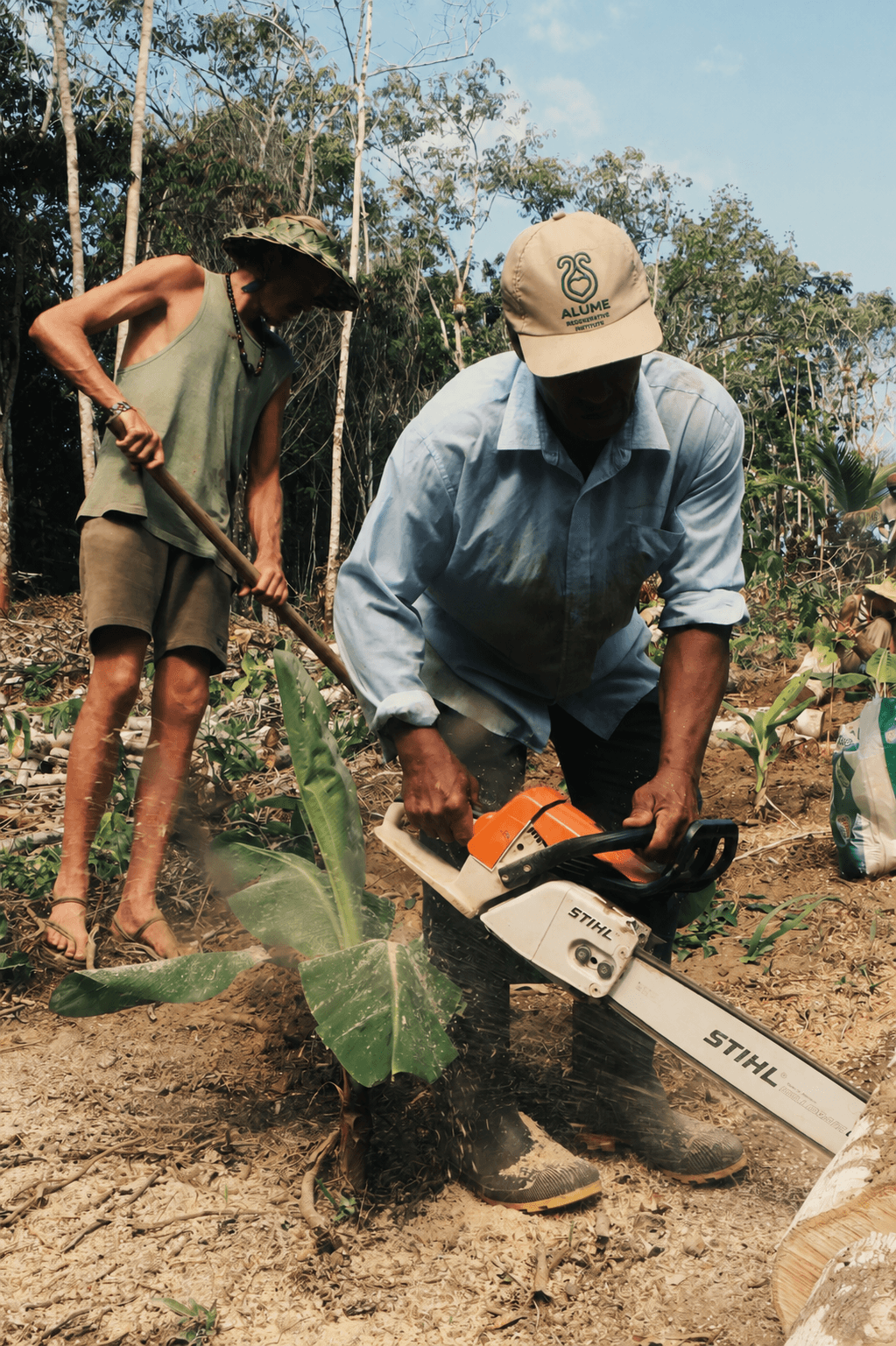
Today, we remove the rubber trees before planting. Every tree that leaves makes room for a more diverse forest to return.
In many ways, Fazenda ALUME is not only restoring an ecosystem—it is continuing a story. The dream has changed. The commitment to the land has not.
Location
At the heart of one of Earth’s greatest biodiversity hotspots.
14.5537°S · 39.0893°W
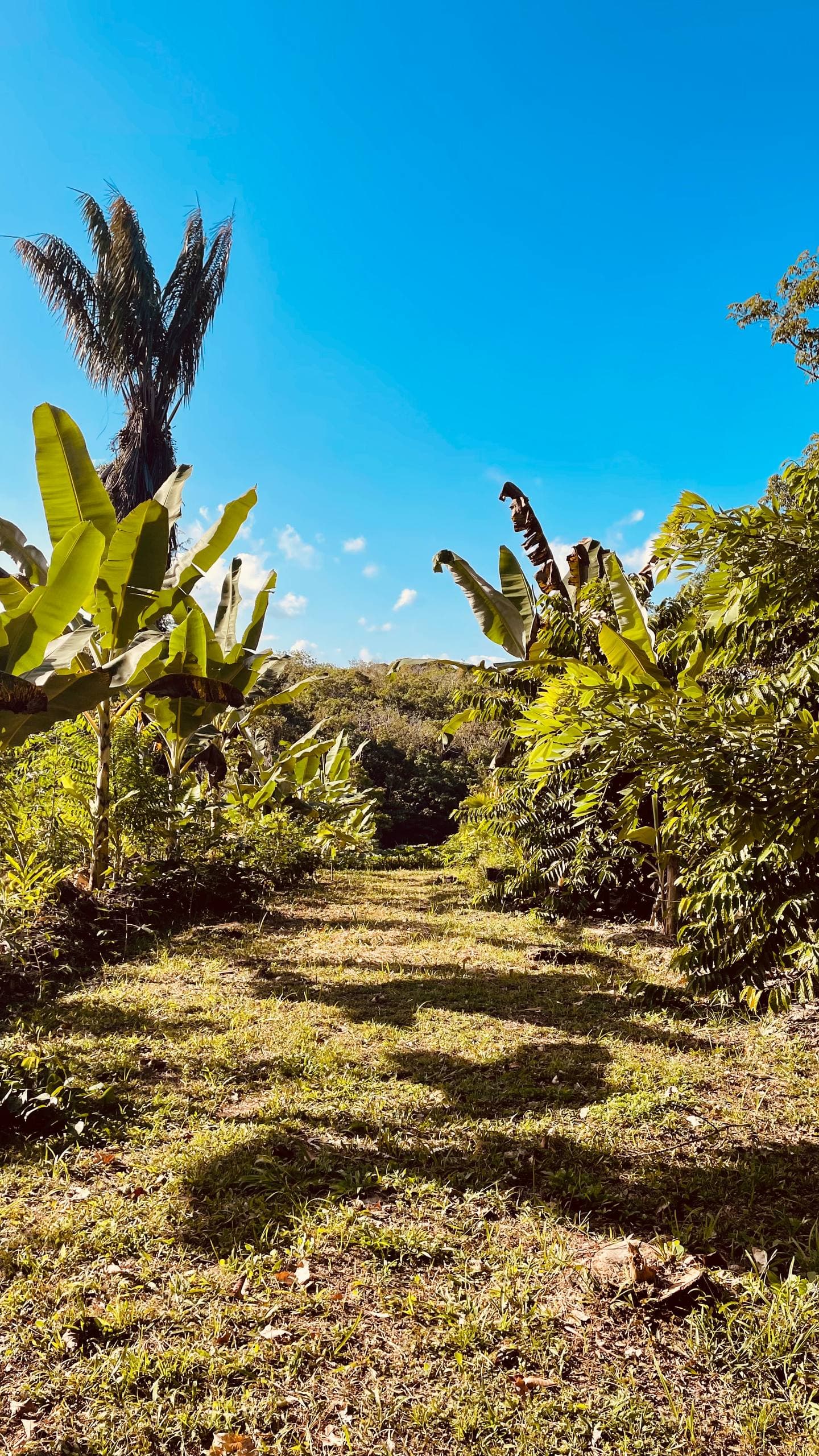
Fazenda ALUME is located in Aderno, Aritaguá, Ilhéus, within one of the most biologically diverse regions of the Atlantic Forest. The property lies between the Serra do Conduru State Park, the Lagoa Encantada Environmental Protection Area, and the buffer zone of Ponta da Tulha State Park, giving it exceptional ecological connectivity and restoration potential.
For more than half a century, nearly 9,000 rubber trees replaced one of the world’s richest ecosystems with a simplified monoculture. Today, approximately half of the property remains under rubber plantation while the other half is regenerating as secondary forest. ALUME’s work is to accelerate this transition—restoring biodiversity, rebuilding ecological processes, and creating resilient landscapes that support both nature and people.
What began with one piece of land has grown into a long-term commitment to develop and share practical models for regeneration.
Reforestation Progress
Fazenda ALUME is divided into five functional zones—each with its own strategy, monitoring protocol, and relationship between ecological recovery and productive use. Together, they allow different regenerative approaches to work as one living system.
Zone 1
Rubber trees are removed in sequences to avoid abrupt soil exposure. Native pioneers follow immediately to stabilise soil and begin succession.
Zone 2
Native forest species grow alongside food, shade, and medicinal crops in stratified systems. Sponsored trees are planted here, GPS-registered, and monitored.
Zone 3
Existing secondary forest regenerates with targeted interventions such as invasive-species removal, habitat features, and succession monitoring.
Zone 4
Defined plots support soil biology, species-performance, and hydrology trials that strengthen ALUME’s open restoration methodology.
Zone 5
Gardens, medicinal beds, and infrastructure bring ecological function together with residencies, educational visits, and community workshops.
Legacy
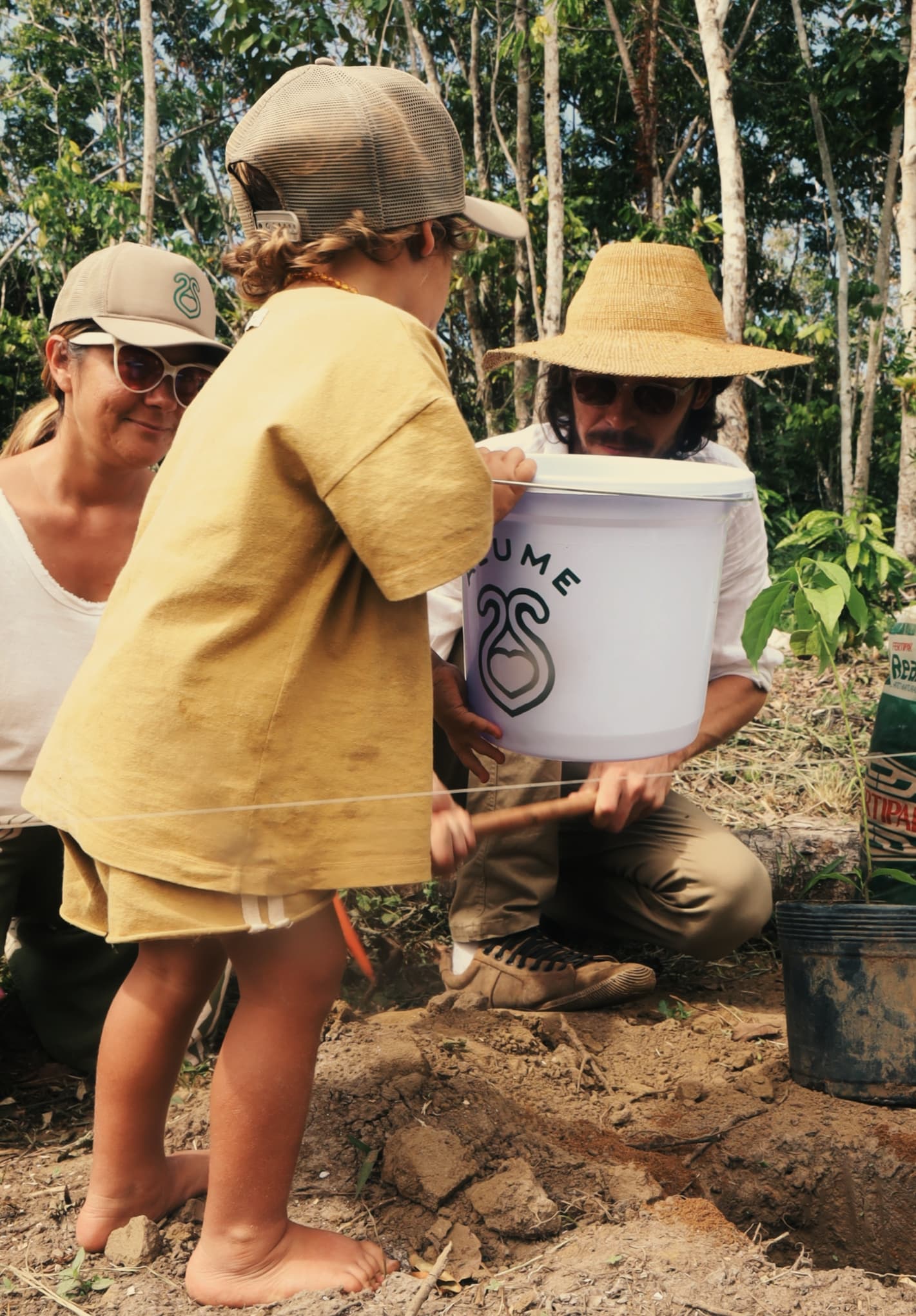
This is more than a restoration project—it is the foundation of an institution designed to endure.
Fazenda ALUME exists to develop the methods, partnerships, and financial models that make long-term ecological stewardship possible. Every lesson learned here is intended to be shared openly, allowing communities, landowners, researchers, and organizations to adapt and improve upon what works.
We believe regeneration grows through collaboration. That is why our methodologies, monitoring systems, and practical knowledge are developed as open resources whenever possible, helping restoration extend far beyond the boundaries of this land.
Open Science · Long-Term Monitoring
Lasting restoration requires more than good intentions—it requires evidence.
ALUME is building an open monitoring programme that combines field observations, scientific methods, and collaborative research to understand how ecosystems recover over time and to openly share what we learn.
Building the baseline
Ecological restoration is measured over decades, not months. Our goal is to document how landscapes recover while continually improving our restoration methods.
Every restoration journey begins by understanding the land as it is today. We are documenting soils, hydrology, vegetation, wildlife, and georeferenced photography to establish a baseline against which future ecological changes can be measured.
Our objective is to create a complete georeferenced record of every tree planted, including species identification, planting date, origin, survival, and long-term growth.
Soil analysis is already part of our restoration work. Over time, we plan to expand monitoring using field methodologies such as DRES, VESS, and biological activity assessments, complemented by periodic laboratory analyses.
We are developing monitoring protocols for groundwater, springs, seasonal water availability, erosion, and water movement across the landscape to better understand the relationship between restoration and watershed recovery.
Camera traps are already helping document wildlife presence across the property. As the programme evolves, we aim to expand monitoring through botanical surveys, biodiversity inventories and ecological succession studies.
Some monitoring activities are already underway. Others will be implemented progressively as the project grows and new scientific partnerships are established.
Open science
ALUME is committed to sharing reviewed monitoring reports, methodologies, and selected data whenever appropriate, so landowners, researchers, NGOs, and restoration initiatives can adapt and improve what we learn. The first materials will be published after collection, review, and validation.
Research partnerships
We welcome universities, research institutes, students, independent scientists, and technical specialists to help design and improve long-term monitoring through field studies, protocols, technology development, publications, and collaborative research.
Visits · Learning · Collaboration
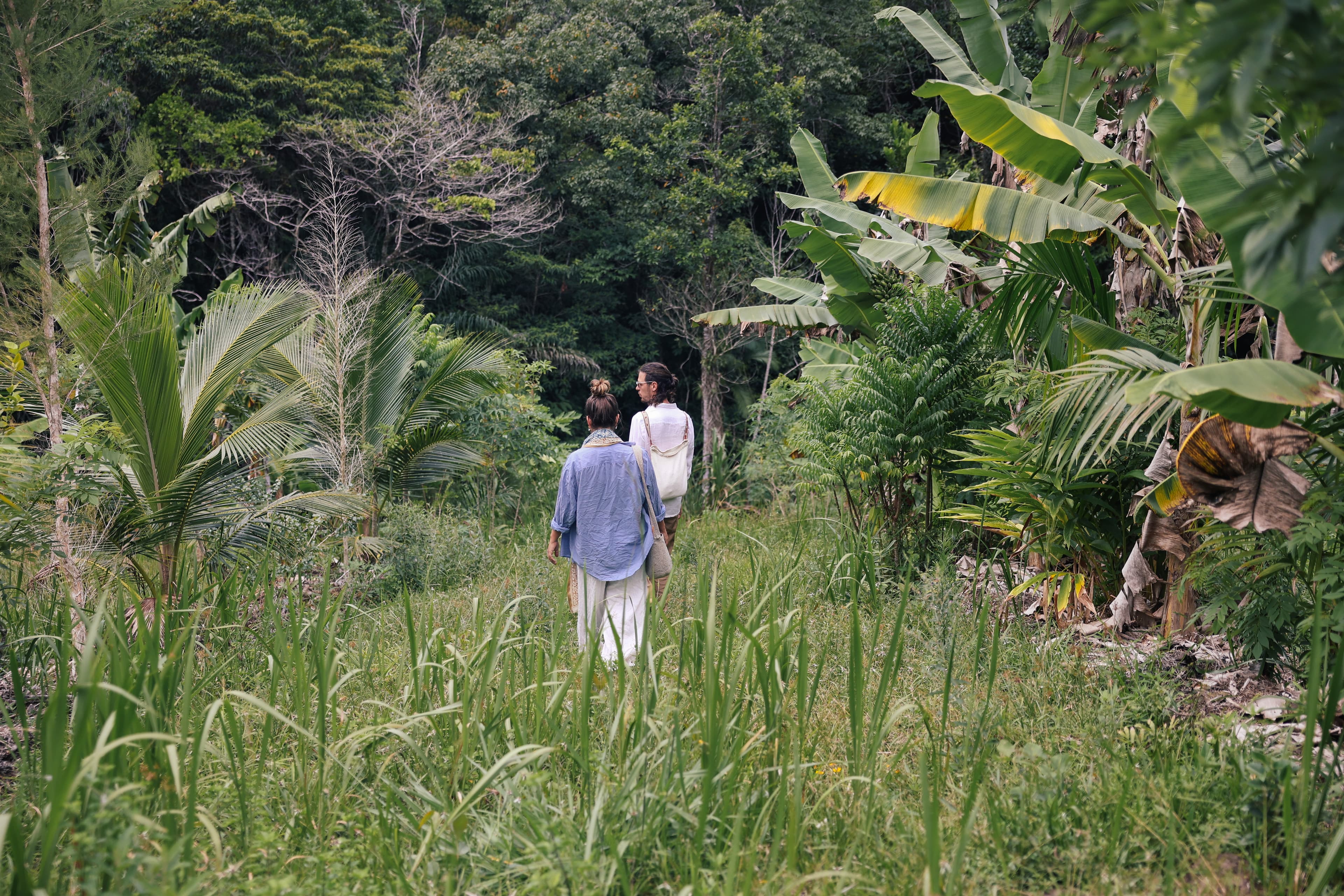
Some places are best understood by walking through them.
We welcome schools, researchers, organisations, partners, and curious minds to experience regeneration, syntropy, and integration in practice.
Each visit is shaped by the group’s interests and what is happening on the land. Guided walks may explore agroforestry systems, restoration areas, native forest, and ongoing experiments, with opportunities to learn about the territory and ALUME’s approach.
Visits can focus on biodiversity, regenerative agriculture, environmental education, scientific research, community initiatives, circular systems, and new ways of living with nature.
Arranged in advance, visits offer space for observation, exchange, and collaboration in a living landscape where regeneration is unfolding.
Come to observe, question, exchange, and experience regeneration in practice.
Plant Exchange · Biodiversity · Southern Bahia
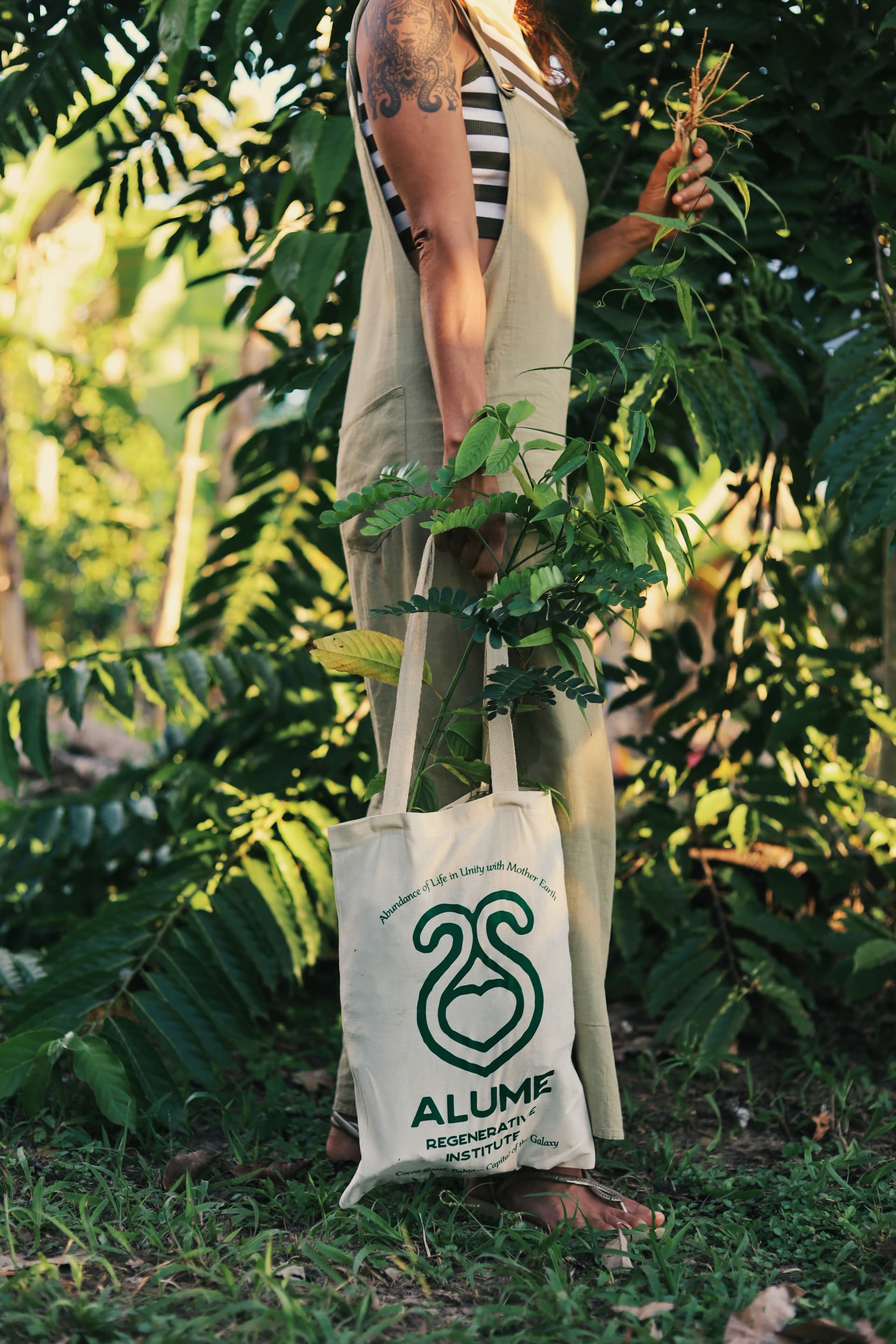
ALUME Plant Exchange connects people, communities, farms, schools, and restoration projects through the exchange and donation of plants, seedlings, seeds, and propagation material.
Based on the principle of nature and abundance, participants are encouraged to contribute more than they receive whenever possible. This creates a living cycle in which native, food-producing, medicinal, and other useful species can move from one place to another, strengthening biodiversity, agroforestry systems, food forests, and ecological restoration.
When someone has nothing to exchange, plants can also be donated, helping ensure that access is not limited by financial resources or by what a person already has.
Through ALUME’s nursery and community exchanges, we aim to grow not only plants, but a wider network of people restoring land, sharing knowledge, and increasing the diversity and resilience of living landscapes across Brazil.
Exchange plants. Share abundance. Grow biodiversity.
2,200+
Trees & plants established
200+
Rubber trees removed
80+
Biodiverse species planted
200+
Metres of farm road improved
6,000+
m² of agroforestry implemented
∞
Open-source knowledge shared
Figures shown reflect ALUME's current field records. Measurement notes and verification are published through our transparency programme.